Sexual Health &
Wellbeing

Sexual health research focuses primarily on risk, disease, and disorder; a “deficit- based approach” that has dire consequences for many within our communities. A focus on only the “bad” aspects of sex and sexuality may partially explain the lack of comprehensive, culturally-competent sexual health-related interventions and sexual education programs in the U.S.
Indeed, the lack of attention on positive pathways to identity formation, the importance of community and peer support, the presence of relationship satisfaction, and the mechanisms of empowerment in sexual autonomy and decision-making, leads to ignorance about harm reduction models, affirmative consent processes, and risk/disease mitigation, among other pressing public health concerns.
We’re working to change this.
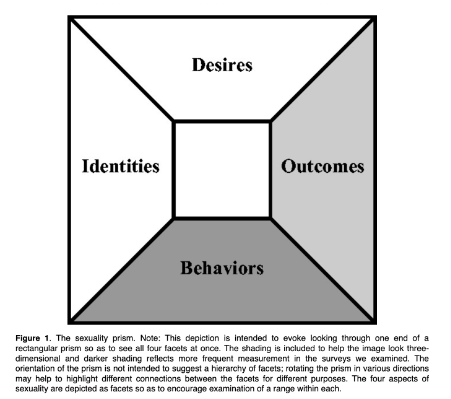
Westbrook, L., Budnick, J., & Saperstein, A. (2022). Dangerous data: Seeing social surveys through the sexuality prism. Sexualities, 25(5-6), 717-749. Click image for direct link to article.
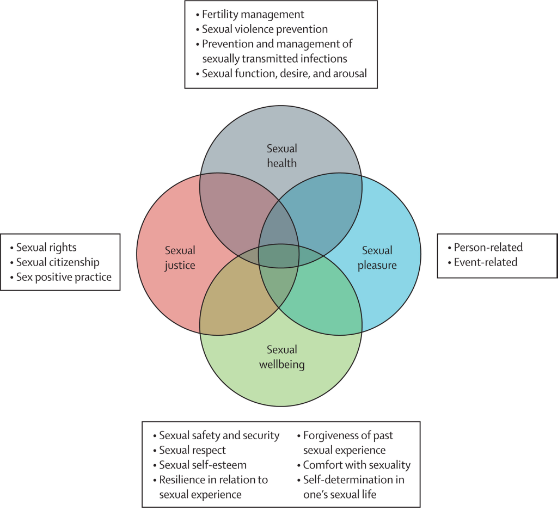
Mitchell, K. R., Lewis, R., O'Sullivan, L. F., & Fortenberry, J. D. (2021). What is sexual wellbeing and why does it matter for public health?. The Lancet Public Health, 6(8), e608-e613. Click image for direct link to article.
What are we trying to do, exactly?
We’re working to develop a comprehensive measure of the breadth and depth of the sexuality prism—which includes sexual beliefs, desires, patterns of behaviors, and identities—and link it to other key aspects of sexual health and wellbeing.
With a focus on strengthening evidence, this project is located firmly within the first step of advancing health equity: identifying key health disparities, as articulated as critically missing by key community members, and identifying the inequalities in access to resources needed to live full, healthy lives. As RWJF—our initial project funder—made clear, “Measurement is not a luxury; it is crucial to document inequities and disparities and to motivate and inform efforts to eliminate them. Without measurement, there is no accountability for the effects of policies or programs.”
-
To develop our measure, we held Community Engagement Studios (k=22, n=111; completed), are conducting in-depth and cognitive interviews (n~100-150; ongoing, 78 completed to date), and will run a survey (n=10,000, tentative January 2026 launch), where we will finalize our measure.
Various working groups are analyzing the results of our community conversations now! We hope to have pre-prints registered within the next few months, as articles are under review.
The learn more about ongoing interviews, check out the website for The Human Sexuality & Wellbeing Project, run by site PI Dr. Vera Ludwig.
When the survey is launched, we will include updated information here.
-
There are wide-ranging positive impacts this data may have on individuals, communities, and public health more broadly.
At the individual level, the results of the survey will highlight the diversity and fluidity of human sexual experiences, relationships, desires, fantasies, and identities, which is hypothesized to bolster identity pride, and in turn supports resilience among many individuals.
Interpersonally, the results may increase awareness, and hypothetically, understanding of LGBTQ+, non-monogamous, and/or kinky people, behaviors, and communities, increasing opportunities for moving toward equity and healing.
Organizationally, this work could be used to inform new programs, support groups, skill-shares, and awareness campaigns, shifting from what continues to be a narrow focus on abstinence/avoidance of “harm” or (in largely metropolitan areas) on prevention of disease (e.g. condoms, PrEP), to a diversity of approaches and interventions: risk awareness and harm reduction campaigns, somatic embodied experiencing and pleasure-centered programs, identity-pride and community-based strengths models, and the proliferation of information on positive-health behaviors and flourishing among SGM people.
The data may also be used to promote community-level shifts and cross-sector collaboration among educational institutions, healthcare and service providers, nonprofits, local organizations, and mutual aid networks, working together to strengthen sexual health services and educational access, and thus improving health outcomes.
This project also has implications for public health broadly, as it supports an understanding that the future of sexual health is strengths-based and asset-focused. Specifically, we aim to show how social support, community consciousness, and identity pride are strengths that promote self‐acceptance, self‐worth, and resilience in the face of risk, “disease,” and other stressors.
-
Concretely, we plan to use the results of this project as pilot data for a Spencer Foundation Vision grant (February 2026 LOI submission planned), partnering with the Co-Founders of Heal Sweet Home, Igancio Rivera and Aredvi Azad, and a number of other community organizations, sexuality educators, and health workers.
We describe the “Just Healing Training” Program project in more detail on it’s own research website page here.